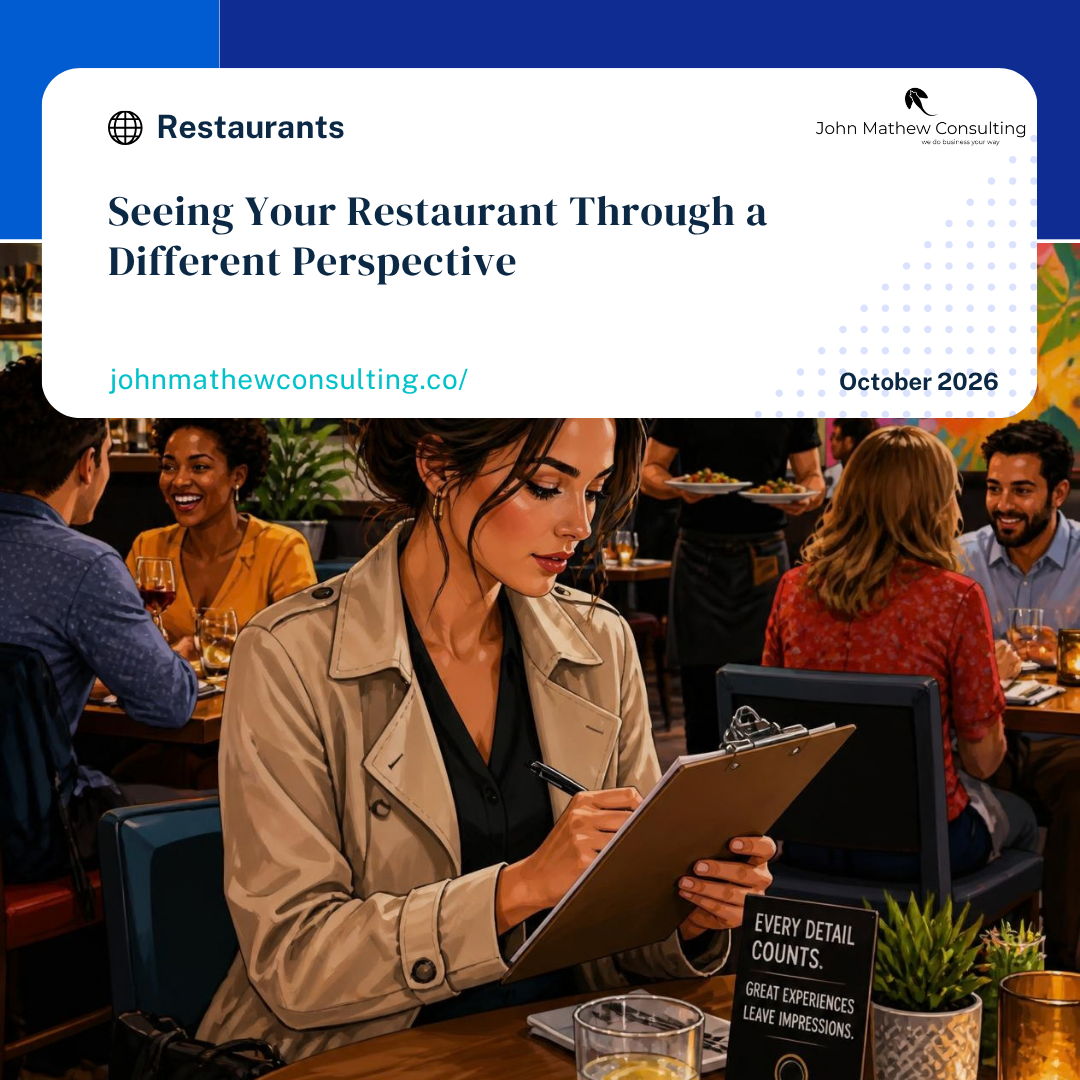
Seeing Your Restaurant Through a Different Perspective
Running a restaurant means being close to the operation every day.
Managers are on the floor. Employees are communicating with leadership. Guests are coming and going. Problems are addressed as they appear, and the team moves on to the next shift.
But being close to an operation can sometimes make it harder to see what is happening across the entire restaurant.
Small issues can become patterns without anyone realizing it.
A communication problem may look like an isolated misunderstanding. A training gap may look like one employee struggling. A service inconsistency may be blamed on a busy night. A guest concern may never be reported at all.
Over time, these small issues can affect the guest experience, employee experience, and consistency of the operation.
Your Team Sees One Part of the Operation. Your Guests See Another.
Employees experience the restaurant from the inside. Guests experience it from the outside. Both perspectives matter.
Regular employee feedback can reveal issues involving communication, teamwork, training, management support, service standards, and operational challenges that may not appear in a traditional management meeting.
At the same time, experiencing the restaurant as a guest provides a different perspective. How does the first impression feel? Is service consistent? Does the team demonstrate confidence in the menu and beverage program? Are the restaurant's standards being reflected in the actual guest experience? These questions are difficult to answer when management is focused on running the shift.
The Value of an Independent Perspective
An outside review does not need to be an investigation. Its purpose can simply be to identify patterns early.
A structured feedback process can give management a recurring view of what employees are experiencing, while an independent guest experience review can provide insight into what customers are actually encountering.
Together, these perspectives create a clearer picture of the operation.
What are employees experiencing?
What are guests experiencing?
Where do those experiences overlap?
What needs attention?
That information can then be translated into practical recommendations for management.
Small Observations Can Lead to Better Decisions
The goal is not to create a long list of problems.
The goal is to determine which observations actually matter.
Some findings may require immediate attention. Others may represent opportunities for additional training or clarification. Some may simply be useful information for management to monitor.
Organizing observations by priority allows restaurant leaders to focus their time where it can have the greatest operational impact.
This can include areas such as:
Management communication
Teamwork and workplace culture
Training and employee support
Service execution
Product and beverage knowledge
Guest hospitality
Cleanliness and atmosphere
Operational consistency
The value comes from turning observations into action.
Building an Early-Warning System
Restaurants often discover operational problems after something has already happened.
A guest complains.
An employee resigns.
A manager notices declining consistency.
A training issue begins affecting service.
A recurring review process creates an opportunity to identify these issues earlier.
Instead of relying exclusively on complaints, turnover, or occasional management observations, restaurant leadership can establish a consistent process for listening to employees and experiencing the operation from the guest's perspective.
It becomes less about waiting for a problem and more about understanding the operation continuously.
Better Operations Start With Better Visibility
Restaurant management already has enough responsibilities.
The objective of an independent review is not to replace management. It is to give management another set of eyes.
When employee feedback, guest experience observations, and operational recommendations are reviewed together, leadership has more information to make informed decisions about training, communication, service, and day-to-day execution.
Sometimes improving a restaurant does not require a major change.
Sometimes it starts with noticing something that has been happening quietly for months.
At John Mathew Consulting, we help restaurant operators gain a clearer view of the systems and experiences behind their day-to-day operation.
Learn more about our restaurant consulting services at https://calendly.com/johnmathew/1st-consultation-conversation